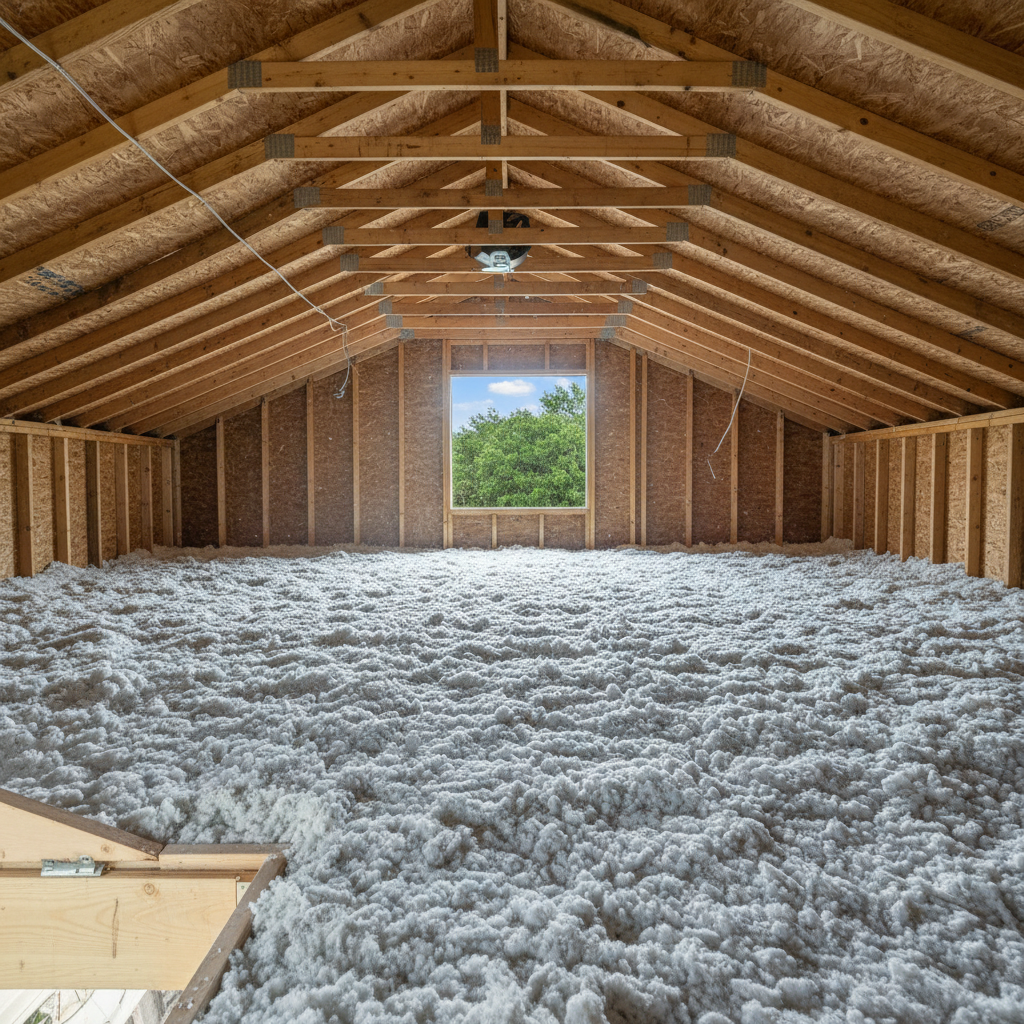
Thinking about blown-in insulation for your attic or walls? Smart move. It's truly one of the best ways to keep your home feeling good and your energy bills from skyrocketing, especially with those brutal Central Texas summers and the occasional winter chill we get. But let's be real, the first thing everyone wants to know is, "What's this going to set me back?"
What Makes the Price Go Up or Down?
There's no single answer, I know, but I can tell you exactly what factors will affect that final number. When we put together a quote for you at Alpha Insulation Co, we're looking at a few key things:
- Material Type: You've got two main choices here: fiberglass or cellulose. Fiberglass usually costs less per bag, though cellulose often packs a higher R-value per inch. That means you might need less of it to hit your target R-value. Cellulose also comes from recycled paper, which some folks really like. Fiberglass, on the other hand, is generally a bit easier to handle in those really tight spots.
- Your R-Value Goal: This is a biggie. R-value basically tells you how well the insulation stops heat from moving through it. For attics in our climate zone (that's Zone 2, for the folks who like specifics), the Department of Energy suggests R-38 to R-60. The higher you go with the R-value, the more material we'll need to blow in, and yep, the more it'll cost. If you live in an older home, maybe down in the historic district near downtown, your attic might be practically bare. You'll definitely need a lot more material than someone just adding a bit to an existing R-19.
- Square Footage & Depth: This part's pretty straightforward. A bigger attic or more wall cavities means more material and more time for our crew. We measure the accessible square footage and then figure out how deep we need to go to hit your desired R-value.
- Accessibility: This one's huge, and people often forget about it. Is your attic easy to get into? Or is it a really tight crawl space? Are there a bunch of obstacles like HVAC ducts, old wiring, or recessed lights we have to work around? The tougher it is for us to move around and get the hose into every little nook and cranny, the longer the job takes, and that adds to labor costs. If we're insulating walls, are we drilling holes from the inside or outside? That changes the labor and patching work.
- Removing Old Insulation: If you've got old, matted, or contaminated insulation that absolutely has to go first, that's an extra service. We've actually got a whole other post about removal costs, but just know it will increase your total.
What Blown-In Insulation Typically Costs in San Marcos
Alright, let's talk real numbers. Keep in mind, these are just estimates, and your specific situation will likely vary. These prices generally cover materials and the labor for installation, but not necessarily removal or extensive prep work.
- Attic Top-Off (Adding to what's already there): If you've already got some insulation (say, R-10 to R-19) and just need to bump it up to R-38 or R-49, you're probably looking at around $0.80 to $1.50 per square foot. This means we're blowing in an extra 8-12 inches of material. For a 1,500 sq ft attic, that could be anywhere from $1,200 to $2,250.
- Full Attic Insulation (Starting from scratch or nearly nothing): If your attic is practically bare, or you're aiming for a super high R-value like R-60, the cost can jump to $1.50 to $2.50 per square foot. For that same 1,500 sq ft attic, you're now looking at $2,250 to $3,750. This usually means blowing in 14-20 inches of material.
- Wall Cavity Insulation: Blowing insulation into existing walls is a bit trickier and often costs more per square foot of wall area. That's because of the access challenges we discussed. You might see prices in the range of $2.50 to $4.00 per square foot of wall surface. This type of job involves drilling holes, blowing in the insulation, and then patching those holes back up.
So, for an average 2,000 square foot San Marcos home that just needs an attic top-off, you're probably in the $1,600 to $3,000 range. If it's a full attic job, that could be $3,000 to $5,000. Wall insulation would be an extra cost on top of that, of course.
What Should a Quote Include?
A good quote from a reputable company like Alpha Insulation Co should be pretty clear, no surprises. Here's what you should expect to see:
- Material Type & R-Value: It needs to say if it's fiberglass or cellulose and what the target R-value is (e.g., "Cellulose to R-49").
- Total Square Footage: The exact area getting insulated.
- Estimated Depth: How many inches of material they'll be installing.
- Prep Work: Any necessary sealing of air leaks (like around plumbing stacks or electrical boxes) or putting in baffles in the eaves to keep your attic ventilated. This is super important for how well the insulation works and for stopping moisture problems, especially with our humidity.
- Labor Costs: What they're charging for the crew to do the actual work.
- Cleanup: What they promise to do to leave your home tidy.
- Warranty: All the details on the product and installation warranty.
What might NOT be included, and something you should definitely ask about, are things like extensive attic cleaning, rodent proofing, or major structural repairs. Just make sure you're comparing apples to apples when you get multiple quotes.
How to Get a Fair Deal
Nobody wants to get ripped off, right? Here's my advice:
- Get Multiple Quotes: Don't just go with the first company you call. Get at least three quotes. It really helps you understand the going rate and what different companies offer.
- Ask for an On-Site Inspection: Any company that gives you a quote over the phone without actually seeing your attic probably isn't doing a thorough job. We need to see the access, what's already there, and any potential headaches.
- Understand the R-Value: Don't just ask for "blown-in." Ask what R-value they're suggesting and why. A lower quote might just be for a lower R-value that won't give you the comfort or savings you're hoping for.
- Check References & Reviews: See what other San Marcos homeowners are saying about them. A good local reputation means a lot, believe me.
- Look for Experience: Insulation isn't exactly rocket science, but there's definitely a right way and a wrong way to do it. An experienced crew knows how to get even coverage, seal those critical air leaks, and work safely.
Blown-in insulation is a solid investment for your San Marcos home. Do your homework, ask the right questions, and you'll get a fair price for a job that pays you back in comfort and savings for years to come.