Do I really need to insulate my basement in San Marcos? It doesn't get that cold.
That's a question I hear all the time, and it's totally fair. We definitely don't get those brutal winters they have up north, right? But "not that cold" isn't the same as "no insulation needed." Think about it: your basement walls are always touching the ground. That ground stays at a pretty steady temperature year-round. In the summer, it's cooler than your house, so heat from inside tries to sneak into that cooler basement. Come winter, the ground is warmer than the outside air, sure, but still cooler than your heated home. So, heat wants to escape into the ground. Without insulation, your HVAC system is constantly fighting this heat transfer. You're just losing energy, plain and simple. Plus, basements can get damp, and insulation actually helps deal with that moisture and condensation. That's a pretty big deal here in Central Texas, especially with our humidity.
What's the best type of insulation for a basement?
When we're talking basements, especially in a place like San Marcos where moisture is always a worry, you've really got to be smart about what materials you pick. I usually tell people to go with closed-cell spray foam or rigid foam boards. Fiberglass batts? Not so much, nope. Here's why:
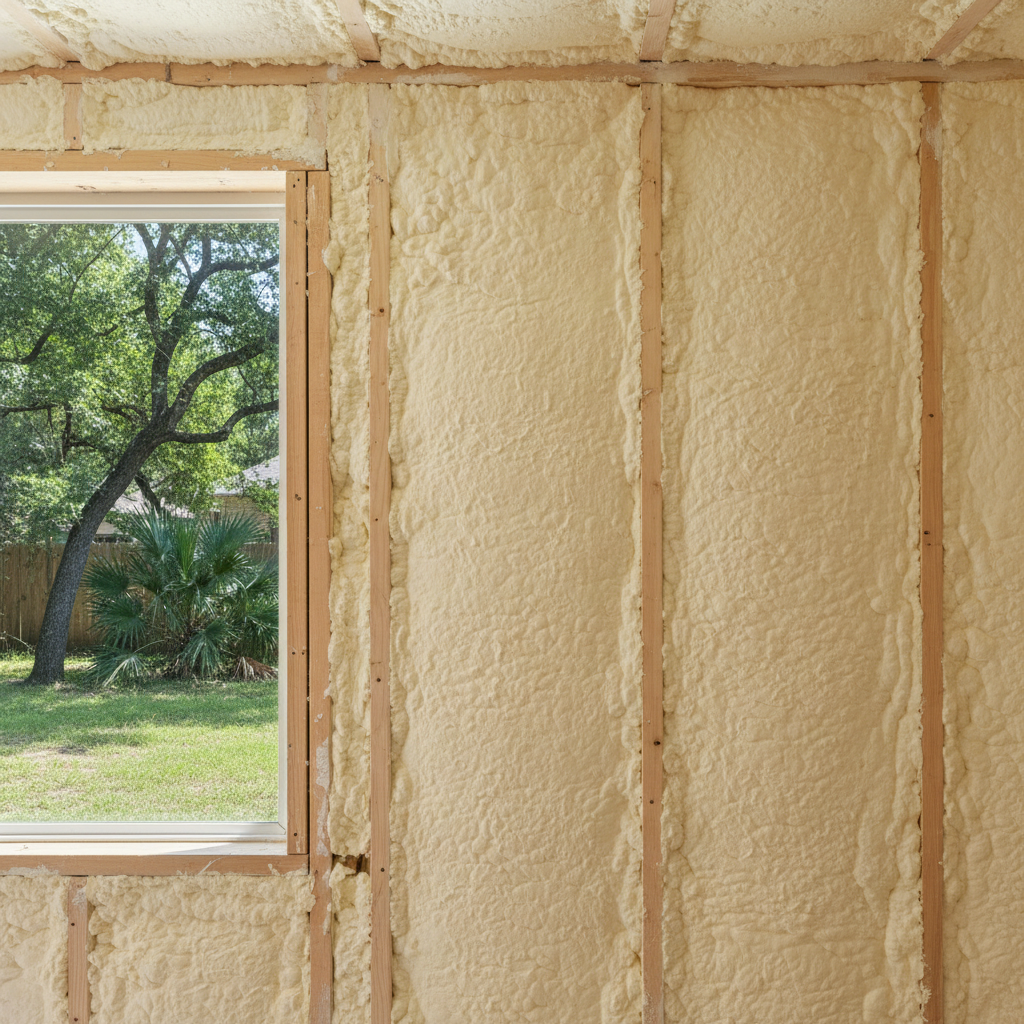
Closed-Cell Spray Foam: This stuff is just fantastic. It creates an air seal, which is huge for both energy efficiency and keeping moisture in check. It also boasts a high R-value per inch, meaning you get excellent thermal performance without needing a super thick layer. It sticks right to the wall, filling every little nook and cranny. It's a bit pricier upfront, I'll admit, but the long-term benefits from energy savings and moisture protection often make it totally worth it.
Rigid Foam Boards (XPS or EPS): These are another solid choice. They're water-resistant and give you a continuous layer of insulation. Typically, you'd install them right against the concrete walls, then build a new wall frame in front of them. You absolutely need to make sure the seams are taped correctly to create a good vapor barrier. They're usually a bit more DIY-friendly than spray foam if you're thinking of tackling part of the project yourself, but for a proper installation, I'd still recommend calling a pro.
The main thing is to steer clear of anything that can soak up and hold moisture, like unfaced fiberglass. That's just asking for mold and mildew problems down the road, believe me.
Should I insulate the basement walls or the ceiling?
This really depends on how you're planning to use your basement. If it's a conditioned space – meaning you heat and cool it like the rest of your house, or you're planning to finish it out – then you definitely want to insulate the walls. This keeps the basement comfortable and stops heat from moving between the ground and your living space. Now, if your basement is unconditioned, just a storage area, and you mainly want to keep the main floor above it warm, then insulating the ceiling (the floor joists above the basement) might be the way to go. But most folks around here want to make their basement usable, so wall insulation is usually the top priority.
What about moisture and mold? Will insulation make it worse?
Quite the opposite, actually, if it's done right. A properly insulated basement, especially with materials like closed-cell spray foam or rigid foam, actually helps manage moisture. Concrete is porous, and moisture can easily wick through it from the surrounding soil. And the ground around here, with our clay soils in places like the Blanco River basin, can hold a lot of water. Insulation acts as a barrier, stopping warm, humid air from inside your basement from condensing on those cold concrete surfaces. That condensation is what often kicks off mold growth. An air-sealed, insulated basement stays drier and more stable, cutting down on the conditions mold needs to thrive. Just remember, insulation isn't a waterproofing solution. If you have active leaks, those need to be fixed first.
Can I insulate my basement myself, or should I hire a professional?
Look, I'm a contractor, so you might expect me to say "hire a pro" every single time. But honestly, it really depends on your skill level and the type of insulation. If you're talking about rigid foam boards, and you're comfortable with cutting, fitting, and sealing, you might be able to tackle it yourself. Just make sure you understand the local building codes for vapor barriers and fire ratings. However, for spray foam? That's absolutely a job for experienced professionals. It requires specialized equipment, proper safety gear, and expertise to apply correctly and safely. A bad spray foam job can be a real headache to fix, trust me. Here at Alpha Insulation Co., we've done enough basements to know all the ins and outs, making sure it's done right the very first time.
How much does basement insulation cost, and what kind of return can I expect?
The cost varies a lot, of course, based on your basement's size, the type of insulation you pick, and whether you're insulating walls or ceilings. Spray foam will be more expensive per square foot than rigid foam boards. But let's talk about what you get back. You'll see it in a few ways. First, lower energy bills. Your HVAC won't have to work nearly as hard to keep things comfortable. Second, increased comfort. Your basement will feel less damp and clammy, more like a real, usable part of your home. Third, improved indoor air quality, because you're reducing the chance of mold and mildew. Finally, if you ever sell your home, a properly insulated basement is a big selling point. It's an investment that pays off over time, both in comfort and financially.